
Build around one customer decision
Start with the decision that keeps the business moving. A salon customer may need to choose a service and book. A contractor’s customer may need to understand the work, see relevant examples, and request a visit. A shop customer may need hours, directions, and a reason to come in.
Every page should support that decision. The home page introduces it. Service pages explain it. A contact or booking path completes it. Pages that do none of those jobs can wait. This keeps the launch focused when the business has more ideas than room on the first version.
Repair or rebuild?
| What you find | Usually start with |
|---|---|
| The business details are wrong, pages are confusing, or photos are old. | Repair the copy, structure, images, and contact path. |
| The site works on a computer but fails on a phone. | Test the key action on a phone, then fix layout, taps, forms, and reading order. |
| Inquiries disappear or booking does not match the calendar. | Fix the delivery or scheduling path before redesigning the visual layer. |
| The platform blocks the action the business needs. | Plan a rebuild around that specific limitation. |
A rebuild is a business decision. It should have a stated reason beyond “the current site looks old.”
Bring the materials that make a site real
- Say what you do in plain language. Write the services, who they are for, and what a customer should do next.
- Gather proof. Use approved work, real photographs, accurate reviews, licenses, menus, policies, or process details that a customer can check.
- List every connected account. Domain, email, forms, analytics, booking, payment, maps, and social profiles belong on one inventory.
- Name the approver. A launch moves faster when one person can answer copy and image questions.
What a designer cannot safely guess
Hours, service boundaries, cancellation rules, prices, licensed claims, and what happens after a form is sent all need an owner at the business. Guessing makes a polished site less trustworthy.
What a sound build process looks like
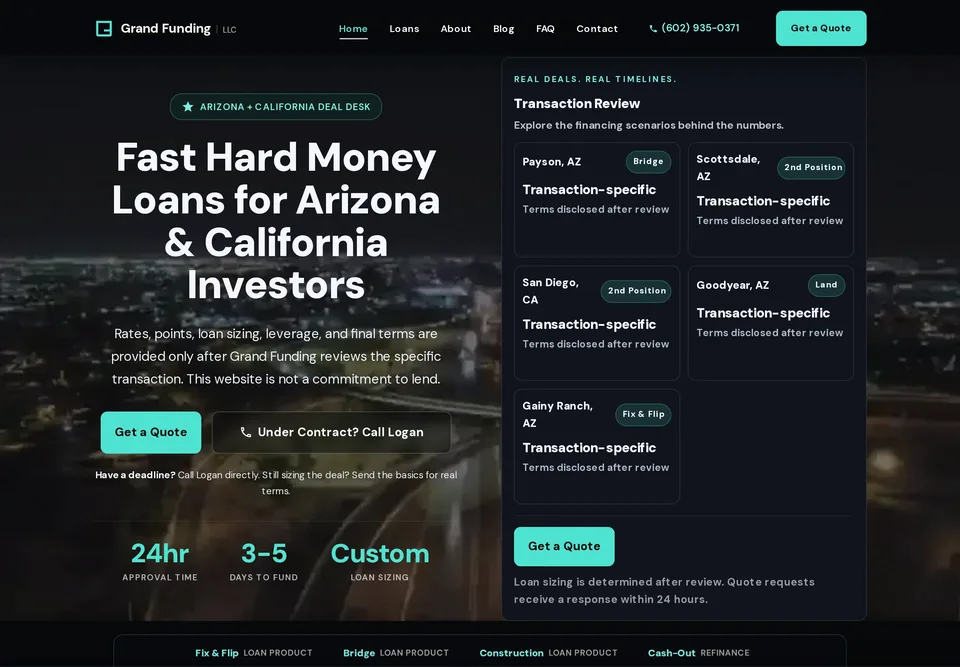
Little Fight builds custom websites with a written scope. A website can be ready in six weeks or less when the scope and materials are agreed. The written plan should say what the business supplies, what gets tested, and what happens after launch. See the Grand Funding project, or use the form delivery guide if inquiries are the immediate problem.
Google’s SEO Starter Guide is a useful check for clear page titles, ordinary links, and information people can use.
Talk to Little Fight.
Send a website link, an error message, or a few lines about the work. We’ll take a free first look and explain what we can help with.
9am–9pm Eastern. After hours, leave a message.