
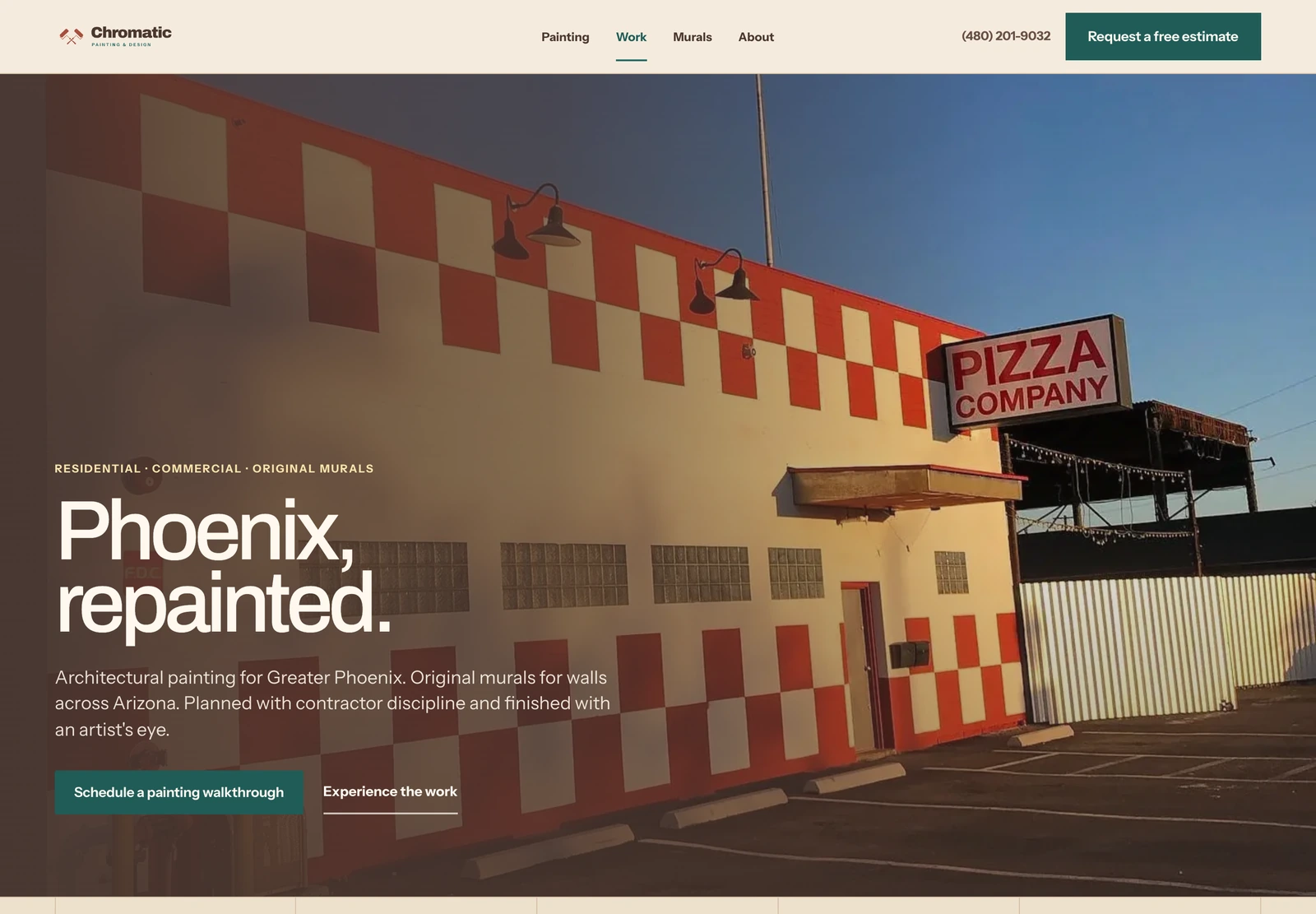
Chromatic Painting & Design
Make the work easy to picture and the next conversation easy to start.
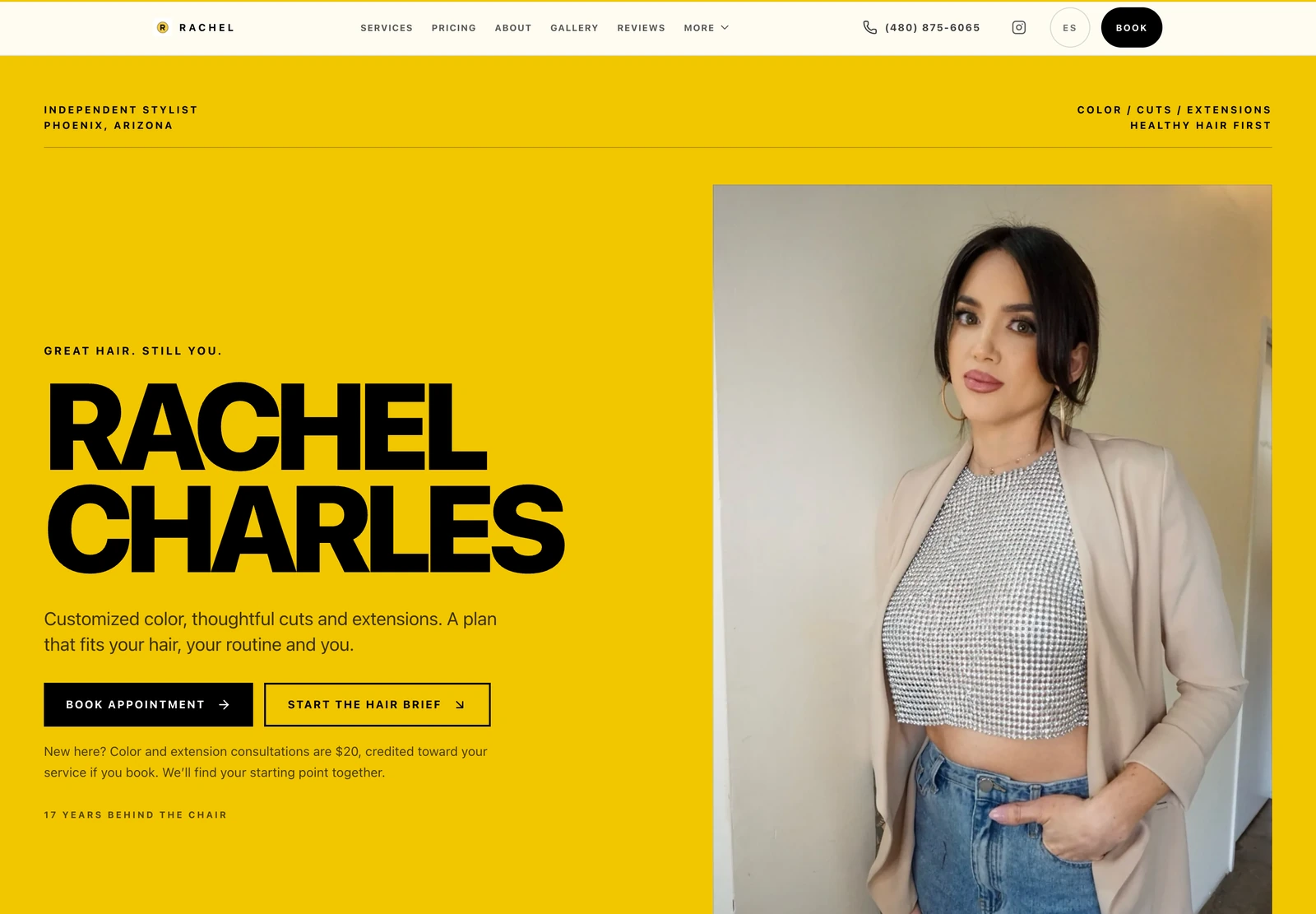
We shape the pages around your work, your customers and the next step they need to take.

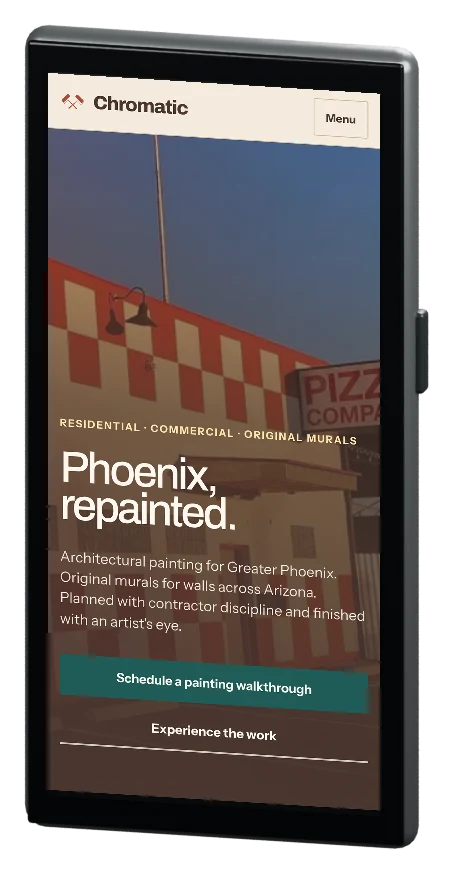
Looks great on any device, so your customers can find you and take action, wherever they are.
Show us the work you want more people to see. We turn it into pages that explain what you offer and make it easy to call, book, or ask.
First, make it clear what you do, who it helps, and what someone can do next. Then give people enough of the real work to make a confident choice.
Selected work
See how a project story, a service choice, and a practical next step can work together.
Make the work easy to picture and the next conversation easy to start.
Help a first-time visitor choose a service before they book.
We handle the design, writing, and build. You bring the business facts and review the work. Booking, payments, and other tools are agreed before the project starts.
Wix or Squarespace can be a good fit when their built-in tools do what you need. Custom work makes sense when the pages or tools need to work in a different way. Wix sites run on Wix, while Squarespace exports some content rather than every platform feature and style. Read Wix’s export guidance and Squarespace’s export guidance.
Compare WordPress, Webflow, and custom websites +
You bring the business facts, photos, access, and approvals. Little Fight handles the design, writing, build, setup, and launch work.
Someone has heard your name. Now they want to know if you do the work, serve their area, or have the appointment they need. Your site should answer that.

“Do they do this?” “Will this work for me?” “What happens next?”

Clear details, real work, and what a person needs to decide.

Specific language and accurate business details.
A clear way to call, text, email, book, or ask.
We write useful answers, link related pages, and check that search engines can read them. We also set up tracking for the ways people contact you.
Useful pages need descriptive titles, direct headings, accurate business details, internal links, and a site search engines can crawl. We connect Search Console, use a sitemap, and add structured business information when it fits. Google says its normal SEO guidance also applies to AI search features; there is no special switch that guarantees a recommendation. Read Google’s guidance.
Calls, texts, emails, forms, and booking clicks can show how visitors move through the site. A click is interest, not a completed job. You tell us what became a real inquiry or customer so we can improve the pages around what is working for you.
With an agreed brief and the materials we need, a new site can be ready in six weeks or less.
We learn the business, plan the pages, and write a first draft. You bring the facts, photos, access, and approvals.
We design, build, connect the agreed tools, and test on a phone. You review and correct business details.
We test the contact paths, prepare search settings, connect the domain, and launch with your approval.
Scope changes or delayed approvals can move the date.
When the work is done, the code, domain, and content stay with you.
50%to start
50%on hosting
No monthly hosting fee. Free monthly checks, upgrades, and changes are included within the scope agreed in writing. Your domain renewal and any optional paid third-party tools remain separate business costs. Licensed assets and third-party tools keep their own terms. A retainer is available when you need faster ongoing help.
Yes. Website projects can run remotely across the United States. On-site IT is a separate New York service.
Usually. We review what you use and confirm what stays, connects, or needs testing in writing.
A website builder can suit a simple site when you have time to write, build, and update it. Hire help when the design, writing, booking setup, or upkeep takes more time than you can give it.
We compare the pages, updates, and connections your business needs, then say when a simpler setup is enough and when custom work earns its place.
Show us the site you have and the customer action it needs to support.
Oversized photos and extra scripts can leave customers staring at a blank screen before they see what you offer.
We measure the page on a phone, fix the heaviest parts first, and compare the result without stripping away the proof customers need.
Send the page that feels slow and tell us what a visitor needs to do there.
Booking is easier when customers can see the service, choose a time or send a request, and understand what happens next.
We test the full path from service choice to confirmation, then connect the request to the way your business actually responds.
Show us the booking link or form customers use now.
The price depends on how many pages you need, who supplies the content, and which tools must connect. We review those with you, then write down the scope and price before paid work starts.
Current terms are 50% to start and 50% on hosting, with no monthly hosting fee. Domain renewals and optional paid tools stay separate; monthly checks, upgrades, and changes are free within the agreed scope.
Tell us what customers need to do on the new site.
A site can look polished on a laptop and still make a customer pinch, squint, or abandon the contact path on a phone.
We test the service and contact pages at real phone sizes, repair what gets in the way, and keep the parts of the site that still work.
Send the phone page that feels hardest to use.
A homepage earns its place when a new visitor quickly sees the problem you solve and where to go next.
Lead with the work customers ask for most. Give each service a clear name, a short explanation, and a link to the details people need before they call.
Tell us the questions you hear before someone chooses your business.
A contact form loses people when it asks too much, hides the next step, or fails before the business sees the message.
We shorten the request to what your team needs first, test it on a phone, and make sure a call, text, or email remains easy to find.
Send the form URL and explain where requests should land.
Readable text, clear controls, keyboard access, and usable forms help more customers finish the task they came to do.
We check the important path with a keyboard and phone, then make sure key facts are real text instead of information trapped inside an image.
Send the page customers rely on most.
A local customer needs your current name, phone, address or service area, hours, and practical visit details before they contact you.
We put those facts where people look and align them with the Google Business Profile, then make seasonal hours and service boundaries easy to update.
Send the public facts a new customer should find first.
A new customer looks for real work, real people, clear service details, and a reason to believe the business can help.
We organize your approved photos, reviews, and service facts around the questions behind a first visit, then make contact feel like the natural next step.
Show us the proof a customer should see before they call.
Start with the services you offer, work people can see, and a clear way to contact you. Add pages when they answer a different customer question.
We plan the first useful path, then aim to launch in six weeks or less once scope and supplied materials are agreed.
Tell us what a customer should understand before they contact you.
A service page should name the customer's problem, show who the work fits, and make the first contact feel straightforward.
We write the practical details only your business knows, including preparation, service area, and what happens after a request arrives.
Share the questions people ask before they request this service.
Useful website photos show the place, the work, the people, and the result a customer is trying to understand.
We choose approved images with a job to do, add context where it matters, and keep important words outside the image itself.
Send the photos that show your work at its clearest.
An event page needs the plan in plain sight: what is happening, when, where, who it is for, and how to join.
We put those facts near the top, connect the registration path, and make changes easy to publish when the schedule moves.
Send the event details and the action a visitor should take.
A shop is ready to sell online when its product details, stock, payment, fulfillment, and customer policies agree with real operations.
We map one product from listing to delivery, then test the supported checkout path before a customer has to discover the gaps.
Show us the product and fulfillment path you want customers to use.
Customers and search tools understand a site when it answers real questions with current facts, clear headings, and useful links.
We turn the questions people ask before they call into readable pages, then keep service areas, hours, policies, and availability accurate as the business changes.
Bring the questions customers ask before they request a quote or book.
A site is ready to share when its facts are current, its main action works on a phone, and every message reaches a real person.
We test the service pages, forms, booking or checkout path, confirmation messages, and account handoff before the business sends customers there.
Tell us the one action a new customer must be able to complete.
Tell us about the business you’re building. We’ll work out what your website can do for it.
9am–9pm Eastern. After hours, leave a message.