The client and the brief.
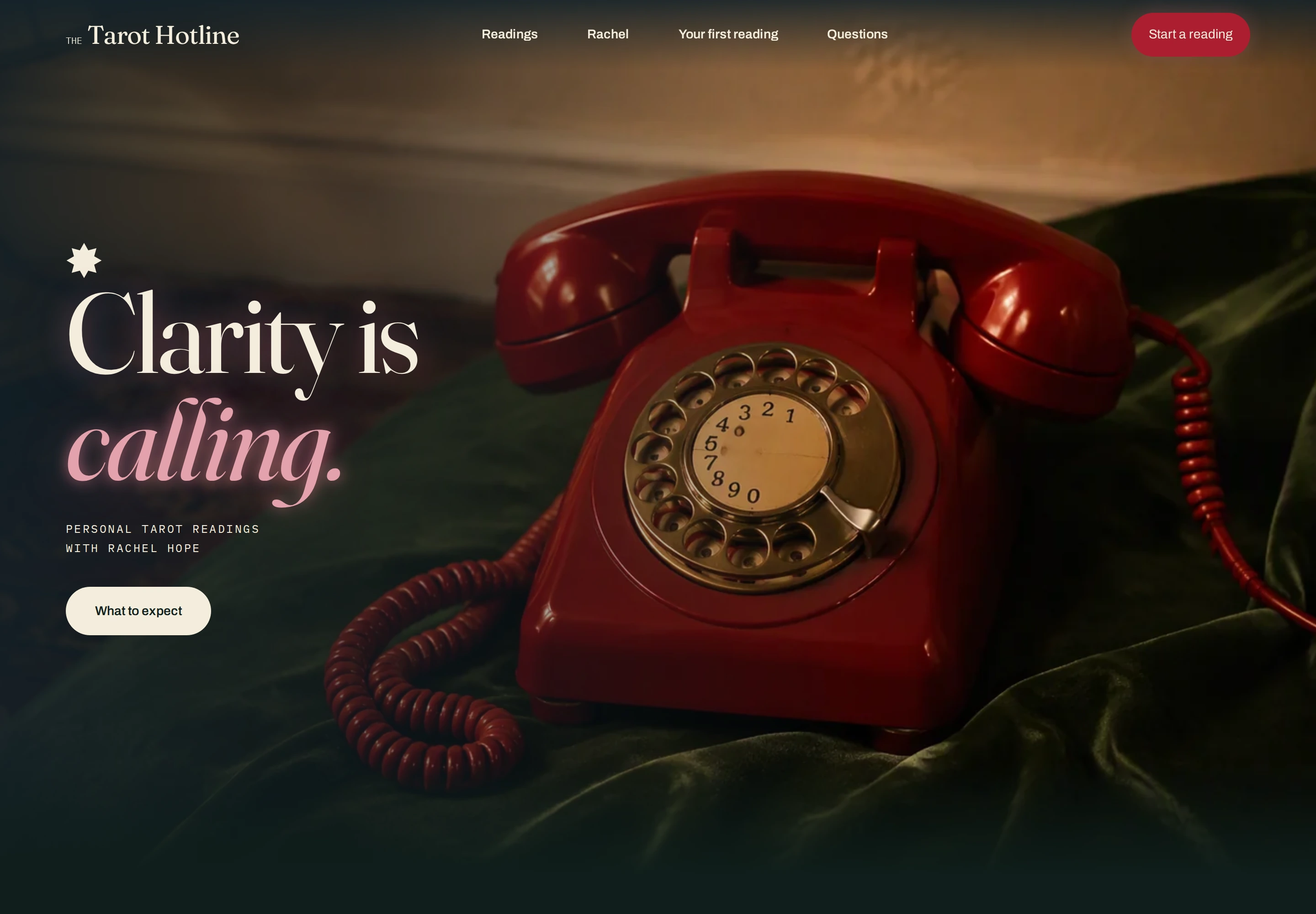
The Tarot Hotline offers tarot readings with Rachel Hope. We built a site that explains the service before asking someone to choose. A visitor can meet Rachel, compare the options, and find a way to start. No knowledge of tarot is needed.
Proof passport
The Tarot Hotline- Captured
- Case updated
- Verified live
What was made
These are build notes, not a promise about your business.
What we will not claim
We do not publish unlinked speed, revenue, or client-result claims for this project.
See your business in this?
Make your next customer’s step this clear.
Show us the site, booking path, or missing front door. We will tell you what to keep and what should change first.See the customer path in action.
Follow the real screens from a customer question to the next useful action.
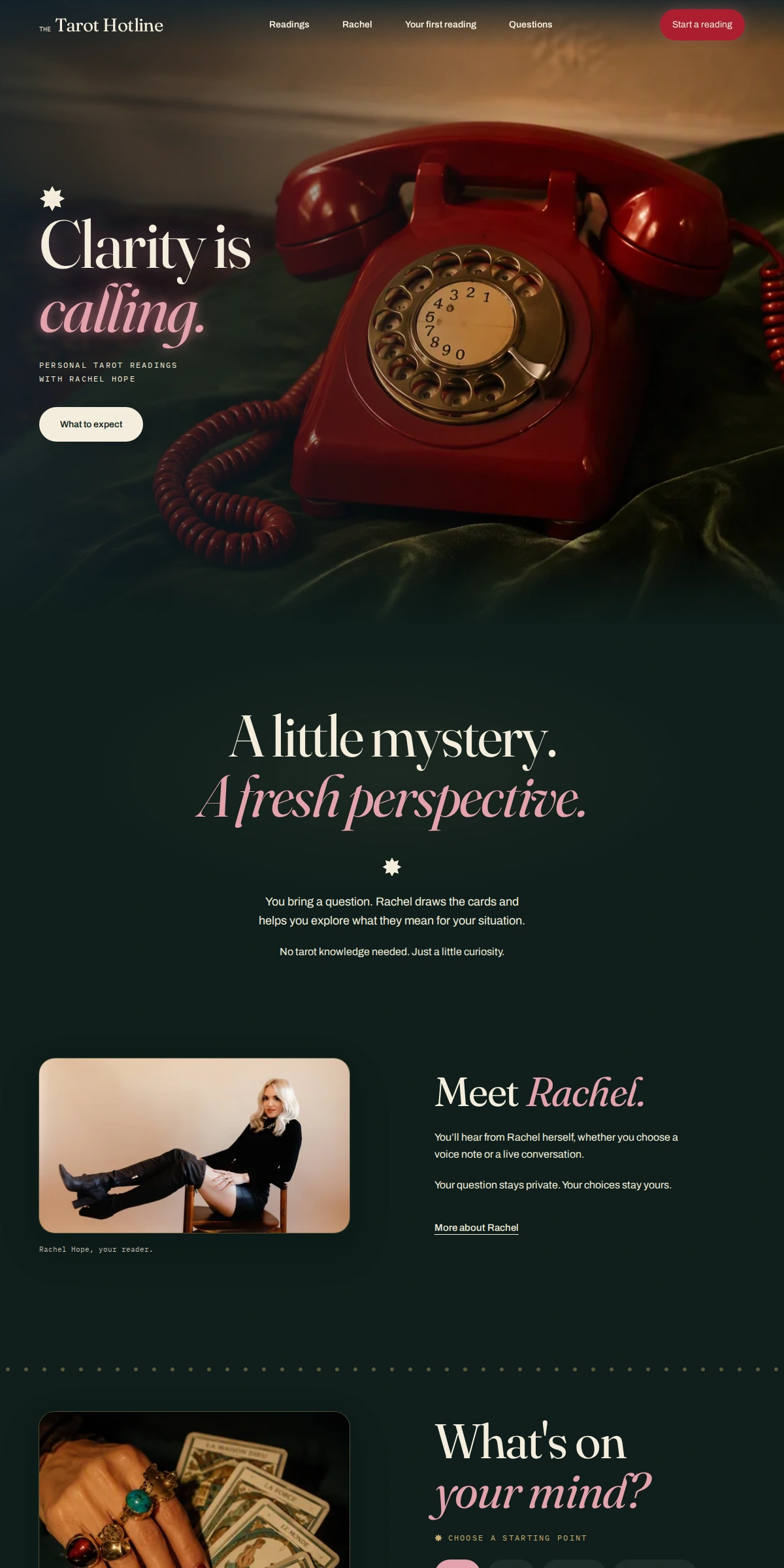
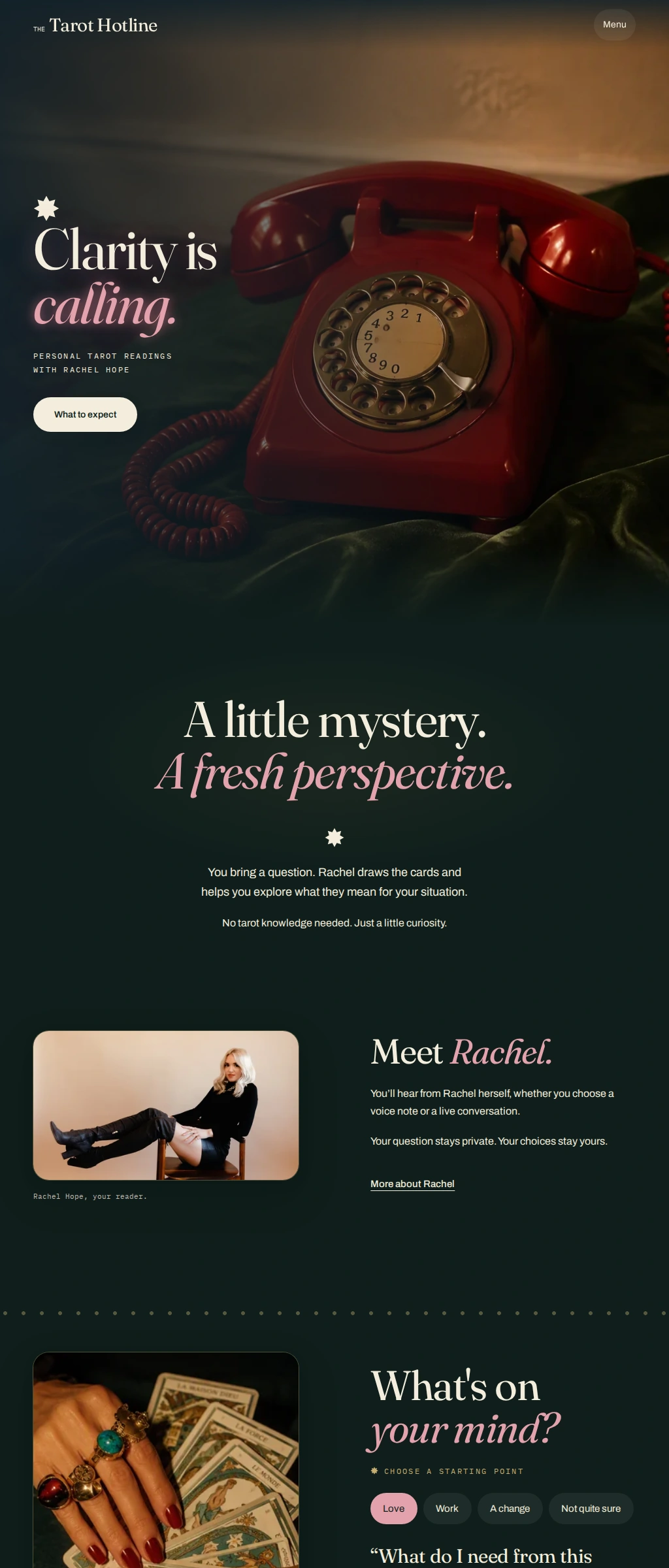
Separate captures show how the same system behaves on a wide desktop, a touch-first iPad, and a phone in one hand.

Try what makes it work
Show the choice before the checkout.
Someone new to tarot may not know what to ask or which format to choose. The website needed to explain the service without making the choice feel complex.
Learn about Rachel and the reading experience.
The whole story, quickly.
Before
Someone new to tarot may not know what to ask or which format to choose. The website needed to explain the service without making the choice feel complex.
Kept
Rachel’s personal approach, the focus on a conversation, and the clear boundary that the visitor makes their own choices.
Changed
We gave the reading formats clear descriptions and next steps. A first-reading guide and a question path help people who are not ready to choose.
After
A visitor can understand the service, compare a voice note with a live conversation, and choose a next step without knowing tarot terms.
Why it looks this way.
A red rotary phone gives the site a clear point of view. Deep green, cream, and pink carry that mood through the pages. The look fits the hotline name. It does not make a visitor guess what to do.
The words have the same job. The site says what happens next, rather than making grand claims. Rachel stays part of the story. The visitor stays in charge of their own choices.
Show the choice before the checkout.
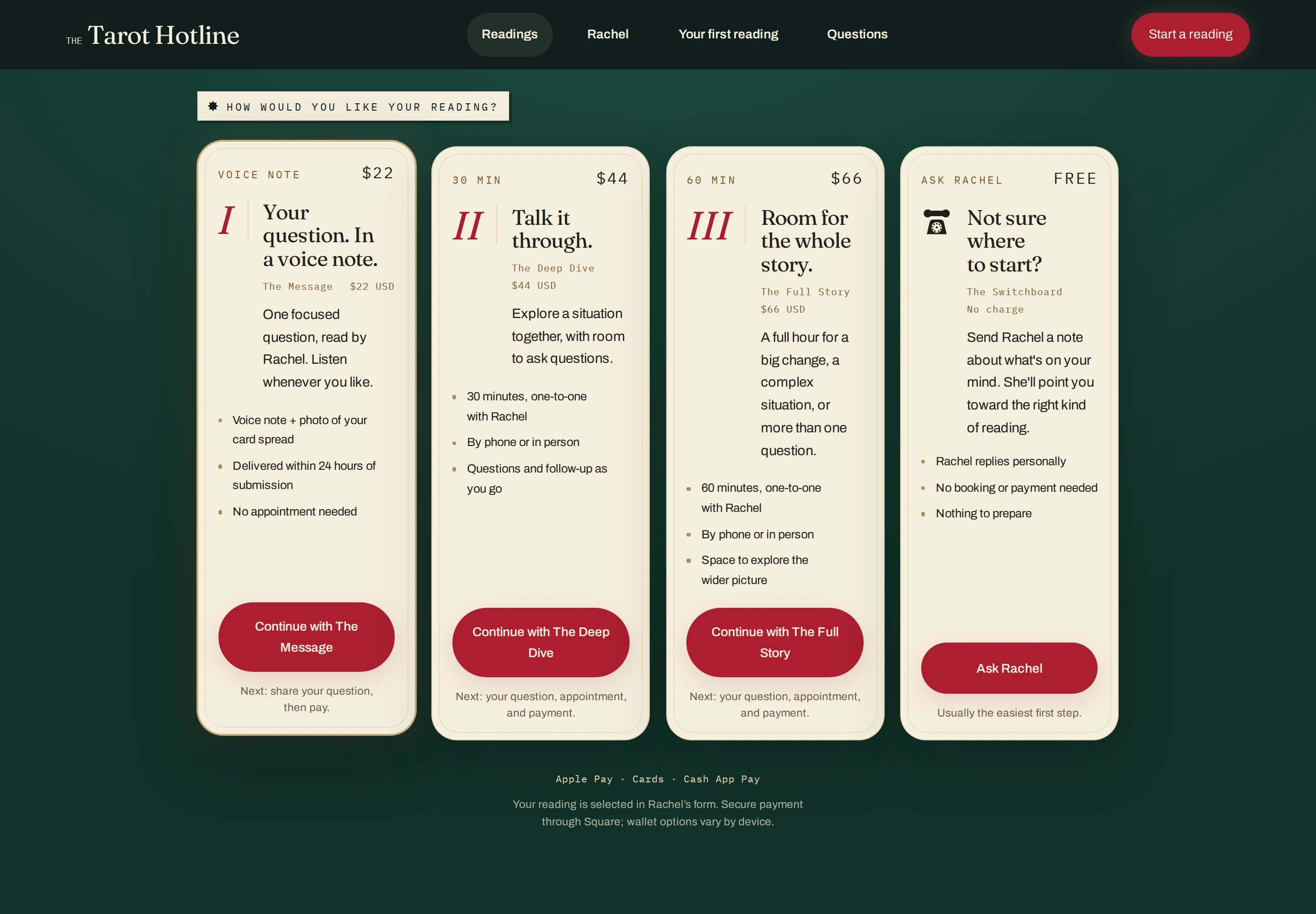
The readings page separates a voice note from a live talk. Each choice says how it works and what comes next. A visitor can compare the options without having to work out a hidden set of plans.
Unsure visitors can ask Rachel a question before paying. A guide for a first reading covers the basics. There is a clear path for people who are not ready to choose.
How the parts connect.
Each reading leads to the right form, time choice, or Square payment step. The site explains those steps before the handoff. Looking at this case study does not buy a reading.
Questions, terms, and privacy notes have their own pages. The work shown here is the website. It makes no claim to predict events or take the place of expert advice.
The site makes a personal service easier to grasp. It leaves room for curiosity, with the format, cost, and next step clear on the client’s pages.
About this project.
Who built The Tarot Hotline website?
Little Fight NYC built the website for The Tarot Hotline, Rachel Hope’s personal reading service.
Is this the Hair By Rachel Charles project?
No. These are separate businesses and separate projects. This case is about The Tarot Hotline and Rachel Hope.